
VIII AWARDS · BENEDICT XVI CENTENNIAL
Integrating Truth.
Rewarding Reason.

Your work has something to say about the questions that matter most.
Four €25,000 prizes. Recognition at the Vatican. A community committed to truth.
Bring your research or teaching into the conversation.
Applications close 10 March 2027.

Knowledge has grown.
Our horizon must grow with it.
We can map the brain, reshape living systems, and build machines that answer in our own words. Yet the questions that give these achievements direction remain. Who is the human person? What can we know? What ought we to do? What makes a life meaningful?
When knowledge is divided into isolated fields, these questions fall between them. You know the cost. Research measured only by output, teaching reduced to training, and the deepest reasons for your work left unspoken.
Benedict XVI called us to enlarge the horizon of reason. To bring the rigor of science into conversation with philosophy and theology. To seek truth about the whole person, and to keep the question of God within our intellectual horizon. This is Expanded Reason.
In 2027, the centennial of his birth, the VIII Expanded Reason Awards carry that invitation into the work of our own time. We honor it through the questions we pursue, the students we form, and the knowledge we place at the service of human flourishing.
Convened by Universidad Francisco de Vitoria and the Vatican Foundation Joseph Ratzinger-Benedict XVI, the Awards recognize scholars who undertake this work.
Your research and teaching are part of this task. We invite you to carry it forward with us.

What You Gain as a Laureate
01

Recognition That Matters
Four prizes of €25,000 honor research and teaching that open a discipline to the deepest human questions. Recognition for the intellectual courage at the heart of your work.
02

A Place at the Vatican
Celebrate your achievement at the Vatican awards ceremony, among scholars who share your commitment to truth. The Institute covers laureates’ transport and accommodation.
03
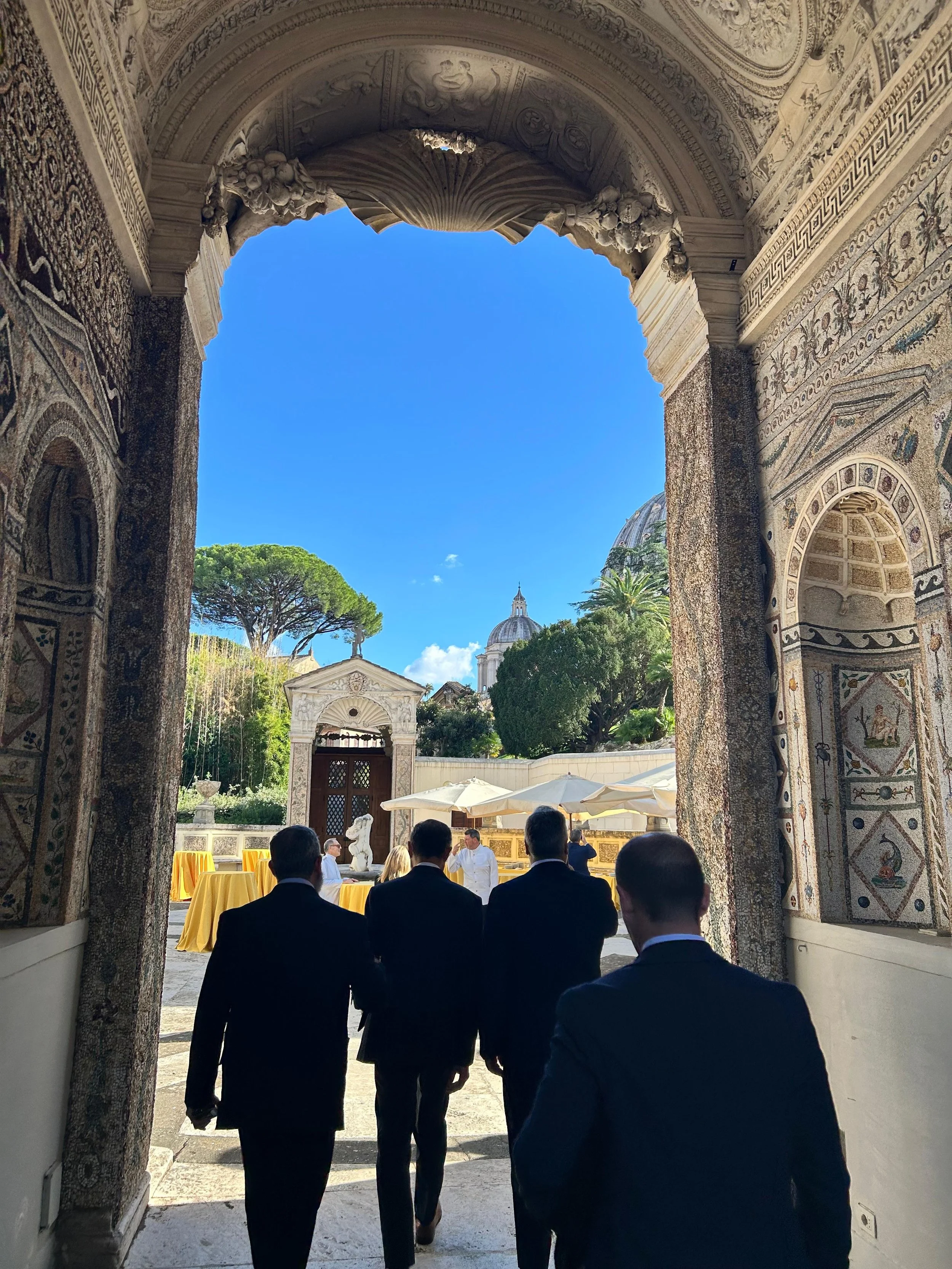
Your Ideas, Heard
Present the central insights of your work at a seminar with Universidad Francisco de Vitoria professors. Bring your questions into a conversation that reaches beyond your own field.
04

A Lasting Community
Join the Institute’s international network of collaborators and receive invitations to future academic activities. Find peers who share your conviction that knowledge serves truth and human flourishing.
Meet the voices shaping this movement
“When we free ourselves from tiny academic boxes, we discover far richer paths of research.”
Robert Enright, Ph.D.
Educational psychologist
Expanded Reason is for every academic, not just theologians or philosophers.
Professors. Researchers. Psychologists. Economists. Lawyers. Biologists.
Every discipline has something to contribute to the questions of person, truth, the good, and meaning.

“Expanded reason means thinking more holistically about stuff… It’s not just about making money, but about making the world a better place, socially and ecologically.”
Bruno Dyck
Management Theorist

"We are convinced that ethics is not the brake, but the real engine of technological progress. So, our values drive us to keep searching for the truth, a truth that none of us have 'in our pocket.'"
Gonzalo Génova
Computer Engineer

"To reverse the excess of specialization and make room for cross-enrichment, we must migrate towards a collaborative project of social cognition that demands intellectual virtues."
Claudia Vanney
Physicist

"The lack of a humane philosophy has fragmented the academy and divided our society. We must reclaim what Gilson called 'the unity of philosophical experience.'“
William Simpson
Assistant Professor

“If we want philosophers and scientists talking to each other, the students should see that happen, actually see them come in and argue with each other in front of the students.”
Therese Lysaught
Healthcare Professor

“Modern man is always actively searching, and we have to learn, first of all, how to be receptive to reality.”
Michael Taylor
Teaching Fellow
Scholars across disciplines are rediscovering that every field, when open to truth, contributes to the same horizon.
Join the thinkers who still believe truth matters.
“A purely scientific understanding is not enough.”
Maureen Condic, Ph.D.
Neurobiologist
Meet the 2025 Laureates
When Science, Philosophy, and Faith Share the Same Stage

Angela Franks
Body and Identity: A History of the Empty Self
Integrating theology, philosophy, and social sciences to re-humanize the concept of identity.

David Thunder
The Polycentric Republic: A Theory of Civil Order for Free and Diverse Societies
Proposing a moral and political framework that reconciles freedom, pluralism, and the common good.

Juan Eduardo Carreño
Thomistic Philosophy in the Face of the Fact of Evolution
Re-examining Aquinas’s metaphysics in dialogue with evolutionary science.

Pablo López Raso
Insolent Beauty: A Proposal for Appreciating Contemporary Art
Revealing transcendence through modern aesthetics.

José María Torralba
Great Books Program
Forming students through the classics to recover a unified, humane vision of knowledge.

Santiago Bellomo
Augmented Education: Challenges of Education in the Age of Artificial Intelligence
Restoring the human center of learning in the era of AI.
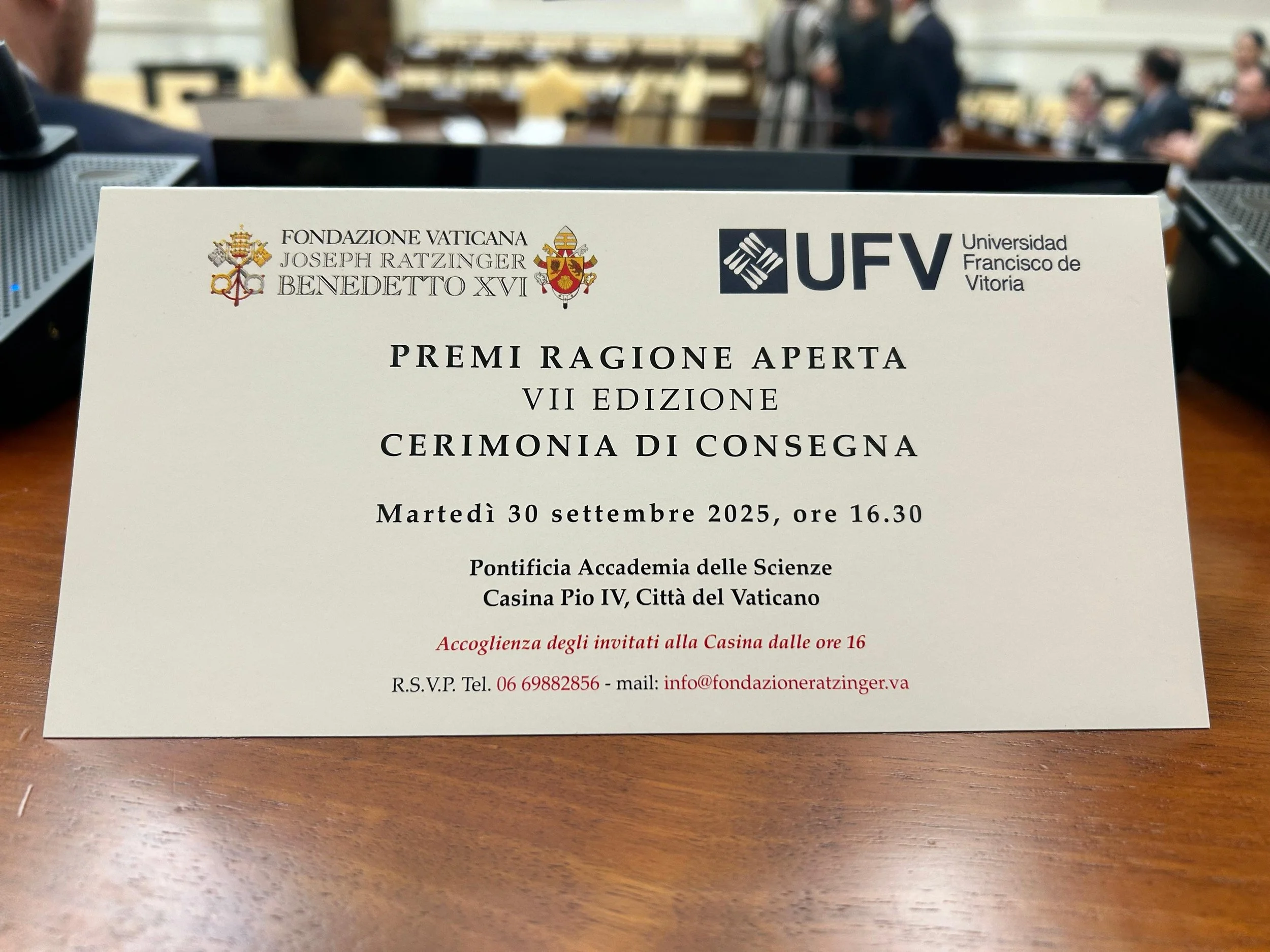
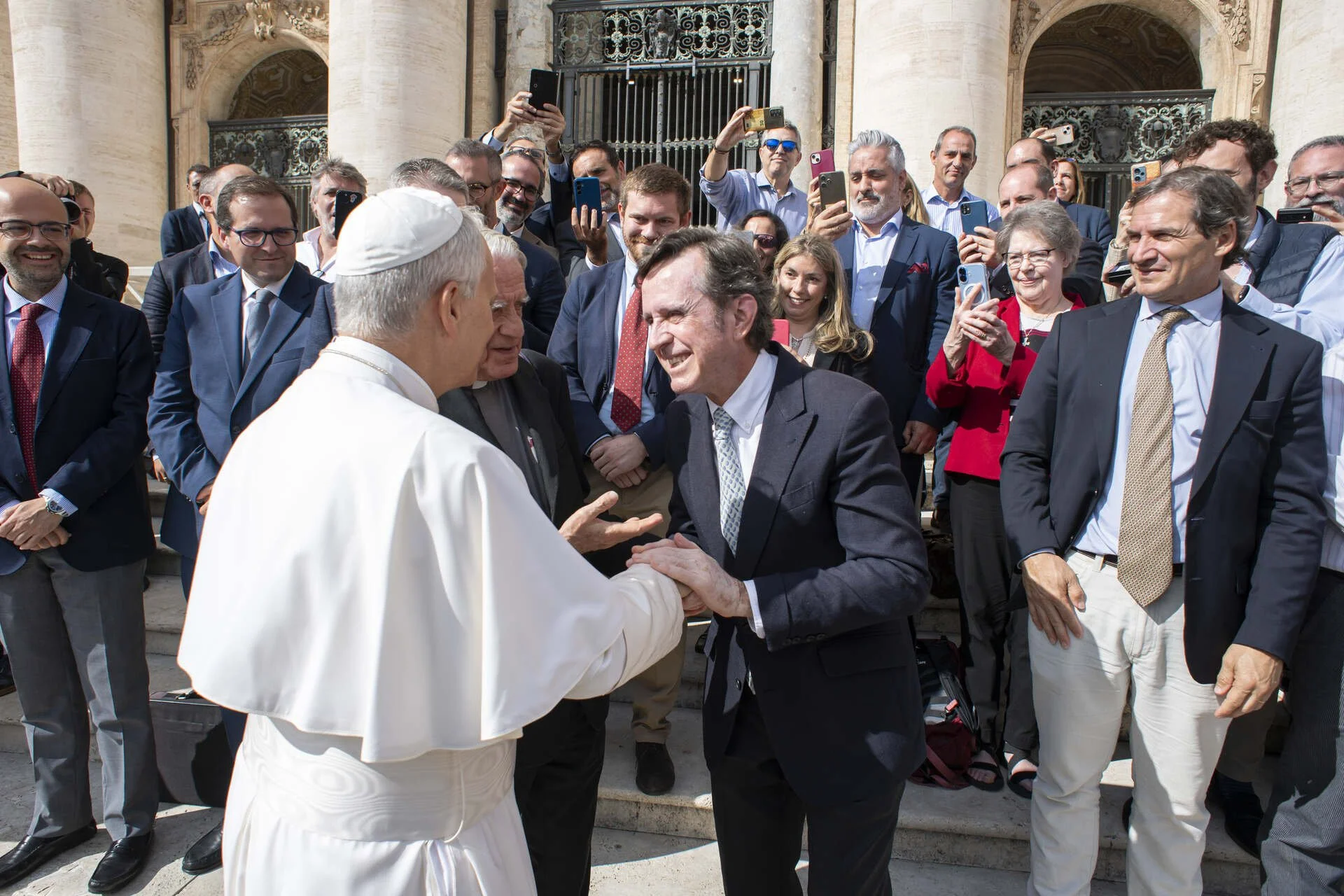
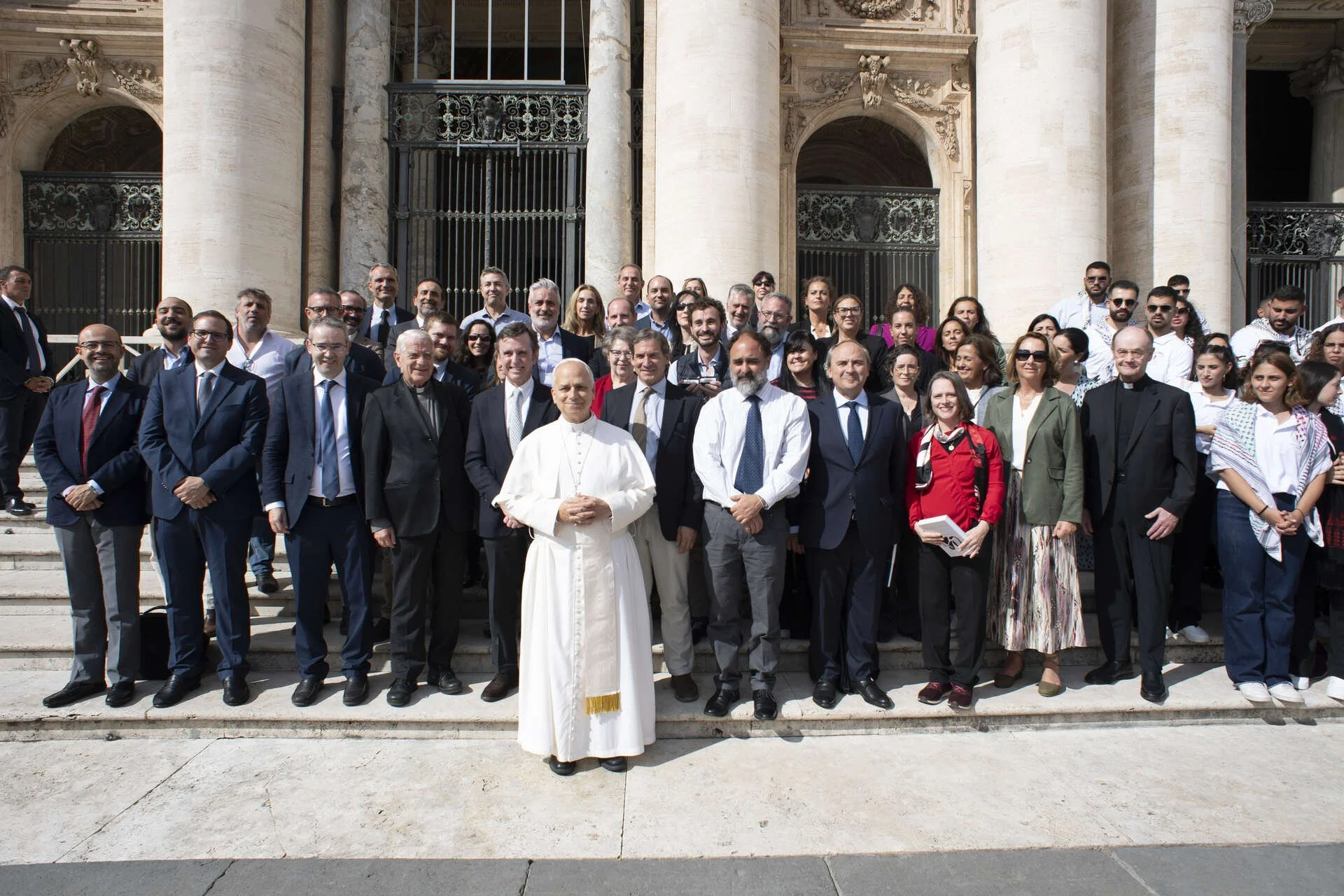
The 2025 Awards Ceremony · Casina Pio IV, Vatican City



Upcoming Events
Benedict XVI Centennial Congress
June 2027
The Institute and Universidad Eclesiástica San Dámaso will gather scholars to explore Benedict XVI’s conception of the university.
Benedict XVI was born on 16 April 1927. A century later, his invitation to enlarge reason puts a question to everyone who inherited his work. What will we do with it?
The June congress continues that conversation. The program and speakers will follow through the Institute.
10 March 2027
VIII Awards applications close
Bring your research or teaching into this year’s call.
7 July 2027
VIII Awards results announced
Published on the Institute’s website.
Your Work Starts Here
Prepare your entry for the VIII Expanded Reason Awards. View the full application requirements.
Abstract
A summary of no more than 500 words, in English or Spanish.
01
Explanatory Document
In 3,000–8,000 words, show how your work brings your discipline into dialogue with philosophy and/or theology through the questions of person, truth, the good, and meaning. Write in English or Spanish and follow Editorial UFV style.
02
Curriculum Vitae
Include a CV for every author. Teams name a coordinator. In your explanatory document, disclose any AI use, including phase, purpose, model, version, and effect.
03
Your Work
Submit your research or teaching project in English, Spanish, Italian, or French through the official application portal.
04

Your Contribution
We welcome university scholars, emeritus and retired academics, research groups, teaching teams, and academic institutions across all disciplines.

Research
Articles and books, published or unpublished, produced during the five years preceding the June 2026 call. Bring the rigor of your discipline into substantive dialogue with philosophy and/or theology, addressing person, truth, the good, and meaning.
Teaching
University programs, curricula, teaching guides, methods, and projects that form the whole person. Show how the four questions enter your teaching, with evidence of what students gained.
FAQs
-
No. Professors, researchers, and institutions from any university and country can apply. The Awards recognize work that brings a discipline into rigorous dialogue with philosophy and/or theology.
-
Yes. Emeritus and retired university professors and researchers are welcome.
-
Yes. Research groups and teaching teams can submit collaborative work. Name a coordinator or principal investigator and include a CV for every author.
-
No. The Research category accepts both published and unpublished articles and books produced during the five years preceding the June 2026 call.
-
The work itself can be in English, Spanish, Italian, or French. The abstract and explanatory document must be in English or Spanish.
-
Use 3,000 to 8,000 words to explain how your work brings your discipline into dialogue with philosophy and/or theology. Address the questions of person, truth, the good, and meaning. Follow Editorial UFV style and disclose any AI use, including phase, purpose, model, version, and effect.
-
The seminar and awards ceremony will take place at the Vatican on consecutive days. The Institute covers transport and accommodation for laureates and authors receiving special mentions. The ceremony date will be announced.
-
Submit through the official Awards portal by 10 March 2027. Prepare your work, an abstract of no more than 500 words, the explanatory document, and a CV for each author. The portal guides you through the submission.
Be Part of the Renaissance of Truth
Your questions deserve company. Join scholars who believe that faith and reason belong in conversation, and that the university still has a vocation to seek truth.


Stay connected to the people, ideas, and events shaping Expanded Reason. Carry the conversation from the lecture hall to the laboratory, from your own work to the questions we share.
Join the community today.

Join Us
As a scholar, you know the frustration of seeing knowledge reduced to utility, detached from its deeper purpose.
The Expanded Reason Institute honors those who dare to reunite faith, science, and philosophy to illuminate humanity’s most profound questions.
In the centennial year of Benedict XVI, let your work carry that mission forward. Submit your application to the VIII Expanded Reason Awards by 10 March 2027.